
How to Track Your Menopause Symptoms (and Spot the Patterns)
How to Track Your Menopause Symptoms (and Spot the Patterns) Tracking menopause symptoms comes down to three moves. Pick a few that genuinely bother you. Log each one at about the same time every…
How to Track Your Menopause Symptoms (and Spot the Patterns)
Tracking menopause symptoms comes down to three moves. Pick a few that genuinely bother you. Log each one at about the same time every day, with a fast 1 to 5 score for how bad it was. Then read the pattern back over a few weeks. That is it. The rest of this is just detail.
The reason to do it this way is that menopause symptoms rarely arrive as a clean story. They show up scattered: a bad night here, a low mood there, a hot flash during a meeting. Held in memory, they blur into "I've felt off lately." Written down and lined up over time, they turn into something you and a doctor can actually work with.
I want to be honest about what tracking is and is not, because it matters here. Logging your symptoms does not treat them and does not diagnose anything. What it does is make the invisible visible, so the person qualified to treat you has real information instead of a foggy recap.
Which symptoms are actually worth tracking
Do not try to track everything. Really. I have watched people build a fifteen-field tracker on a Sunday and abandon it by the next Friday. The ones who still have a log going two years later? They tracked three or four things. Start with the symptoms you feel most, and add nothing else yet.
A practical starter set, drawn from what clinicians see most often:
- Hot flashes: the sudden wave of heat through the chest, neck, and face. Mayo Clinic notes a single hot flash usually lasts one to five minutes, so counting how many you get in a day is more telling than describing any one of them.
- Night sweats: hot flashes that hit while you sleep. Worth logging separately from daytime ones, because they are the main reason your sleep score tanks.
- Sleep disruption: how many times you woke, roughly how rested you felt. This one drives a lot of the others.
- Mood changes: irritability, low mood, anxiety, or feeling flat. Note the day, not a diagnosis.
- Vaginal dryness: a common and very treatable symptom that people often leave off because it feels awkward to raise. Logging it plainly makes it easier to mention.
If you have the energy for two more, add brain fog and general energy level. The NHS lists problems with memory or concentration alongside mood swings and low mood as recognized symptoms of perimenopause and menopause, so you are not imagining the fog, and it is fair to track it.
Keep the list short on purpose
The urge to log every possible thing is strong, and it is worth resisting. A short list you actually fill in for eight weeks beats an exhaustive one you drop after nine days.
Pick three to five symptoms to start. You can always add one later if a new pattern is bugging you. The goal is a habit light enough that you keep it on the bad days, because the bad days are exactly the data your doctor needs.
How to log a symptom so the entry is useful
A good entry has three parts: how bad it was, when it happened, and anything that might have set it off. Keep each one small.
For severity, a plain 1 to 5 scale is plenty. One, you barely noticed. Five, it stopped you cold. The exact words matter far less than picking one scale and never switching, because that is the only thing that lets you compare last Tuesday to this one.
For timing, just note roughly when it hit. Log at the same point each day if you can. Mine is every night, after dinner, phone already in hand. That one habit keeps the data honest and stops yesterday from bleeding into today in your memory. Triggers work the same way. Scribble the usual suspects: a glass of wine, a stuffy room, a tense call, a lunch you skipped. You are not proving cause here. You are just collecting clues.
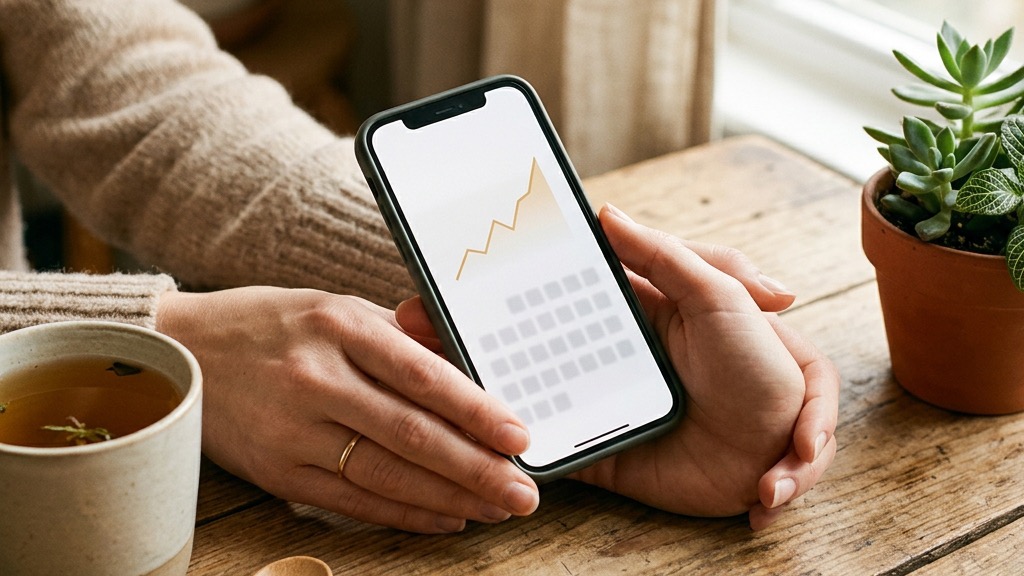
Here is where paper quietly loses. The notebook is never near you the minute a symptom lands, so nothing gets written down. Your phone, though, is right there in your hand. So I nudge people toward a menopause symptom tracker on the one device they never put down. With Rosel, a hot flash is two taps. A rough night, a low mood, a note about dryness, same thing. Keep the logging that light and it survives a brutal week. Make it a chore and you quit by Wednesday.
Reading the pattern over weeks
One entry is noise. Six weeks of entries is a signal. The value of tracking shows up only when you zoom out, and a few kinds of pattern tend to surface.
You start to see clustering: the nights you sweat are the nights you barely sleep, and the day after is when your mood bottoms out. You see triggers repeat, or you see a suspected trigger clear itself when it never actually lines up. And if you are on hormone therapy, you can watch how symptoms move in the weeks after a dose or a formulation change, which is far more useful than a single "I think it's a bit better."
Seeing this by eye across a paper log is hard. This is where a trend chart earns its keep, plotting a symptom against time and against your medication so the correlation is visible rather than remembered. Rosel builds these charts from your daily entries for exactly that reason, though the chart's job is to show you the pattern, not to interpret it. Interpretation belongs to you and your clinician.
A short reference like The Menopause Society's printable menstrual calendars and MenoNotes can sit alongside your tracking too, especially the calendar for logging bleeding patterns, which is a symptom in its own right during perimenopause.
Why your doctor wants the data, not your memory
Menopause appointments are short, and the questions are specific: how often, how bad, since when, does anything help. Trying to answer those from memory in a ten-minute slot is how the important detail gets left in the waiting room.
This is not a soft claim. A systematic review of symptom monitoring in menopause found that structured tracking improved patient-doctor communication from both the clinician's and the patient's side, and helped surface sensitive symptoms like vaginal dryness and low mood that often go unmentioned. It also reported that symptom appraisal tools supported women in making treatment decisions with their doctor. The tracking did not do the deciding. It made the conversation better informed.
There is a practical version of this for anyone already on treatment. If part of your struggle is remembering doses at all, sorting out keeping your HRT on schedule first makes your symptom data far cleaner, because a missed patch confuses the picture. Bring both to the appointment: what you took, and how you felt. That pairing is what lets a clinician decide whether to stay the course or adjust.
Be honest about what tracking can and can't do
Tracking is a mirror, not a treatment. It will not lower your hot flash count or fix your sleep on its own. It shows you and your doctor what is happening so that any decision about care rests on weeks of real observation instead of a rushed summary.
It is also not a diagnosis. A pattern that reads like textbook menopause? Could be your thyroid. Could be a side effect from another pill. Could be something with no link to hormones at all. Which is exactly why the log goes to a professional instead of standing in for one. Hold onto that. A tracker exists to help you and your doctor decide together. It cannot diagnose you, it cannot treat you, and it cannot stand in for a licensed healthcare provider. And because every entry lives only on your phone or your private iCloud, the ugly honest ones get a lot easier to write down.
Start with this week
You do not need a perfect setup. You need tonight. Pick three symptoms. Give each one a number, 1 to 5. Jot the time. Then do the exact same thing tomorrow. Boring, right? Sure. But stack six weeks of that habit and you end up holding what a rushed appointment recap never gives you: your patterns, in your words, ready to hand over.
If you want that log to happen on your phone instead of a notebook you will lose, Rosel on the App Store keeps the daily check-in quick and turns the weeks into charts you can bring to your next visit. The tracking is yours to do; what you learn from it is a conversation to have with your doctor.