
HRT Patch Fell Off? What to Do
Your HRT patch came off? Try pressing it back on, or put a fresh one on a new spot and keep your usual change day. What to avoid, and when to call a pharmacist.
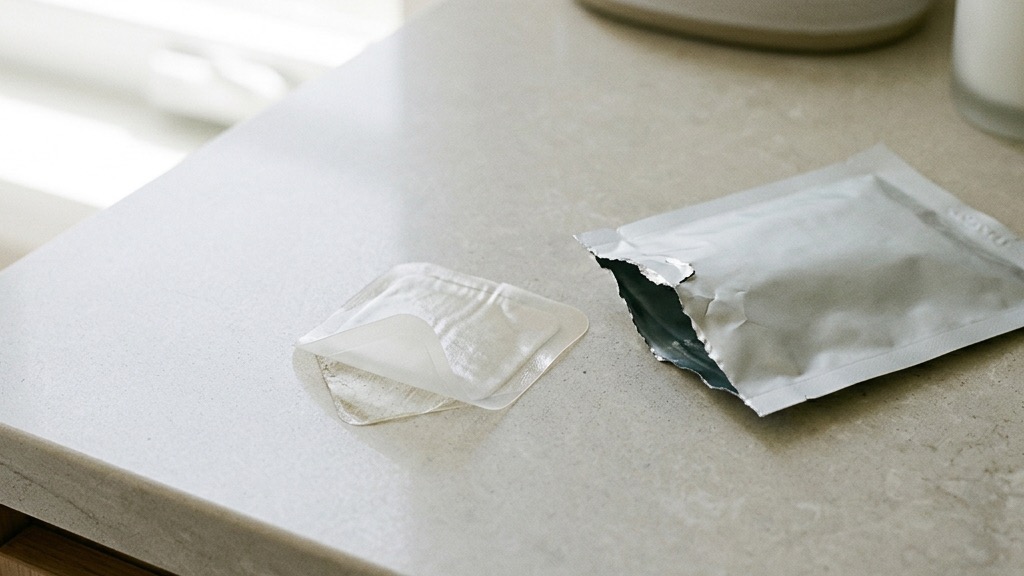
HRT Patch Fell Off? What to Do
If your HRT patch has come off, here is the short version. Try to press it back into place with your fingers first. If it will not stick, put a fresh patch on a different bit of clean, dry skin, then carry on with your normal change day as though nothing happened. You do not double up, and most of the time there is nothing to panic about.
That handles the majority of cases. What is worth knowing is when the press-it-back trick actually works, when to reach for a new one instead, and the single detail that really does depend on your brand. Your patch's own leaflet is always the final word here. What follows is the guidance the reputable sources agree on.
First move: try to press it back on
Do not give up on it the second an edge peels. Per MedlinePlus, the first thing to try when a patch loosens or falls off before its time is simply pressing it back down with your fingers. Did it come away clean, no fluff on the sticky side, still a bit tacky? Then it will usually take again. Press hard, hold a few seconds, and keep an eye on those edges, because the edge is always where the trouble starts.
Skip this step only if the patch is visibly done: covered in fluff, folded over on itself, or no longer sticky anywhere. In that case, do not fight it. Move to a fresh one.
If it will not stick, use a new patch
Sometimes the old patch is just done. When that happens, MedlinePlus has a specific routine: fold it in on itself so the sticky sides seal shut, get rid of it where no child or pet can reach, and stick a fresh patch on a new spot. Why the folding? A used patch is not empty. There is still hormone in it, and that is not something you want loose in a bin or on the floor.
The NHS lands in the same place, and puts it simply: if your patch falls off, put a new patch on a different area of skin, and then change it again at the usual time. A fresh patch, a fresh spot. Not the same square of skin the last one abandoned.
Do not reset your change day
This is the part people get wrong, and it is the one that matters most. You keep your original schedule. Both MedlinePlus and the NHS say to replace the fresh patch on your next scheduled change day, not a week from whenever it fell off.
So picture a Thursday-change routine. Your patch drops off on Tuesday. You put a new one on Tuesday to cover the gap, and you still change it on Thursday as normal. The mid-week patch is a patch, not a reset button. Keeping the change day fixed is what holds your dosing steady and stops the whole routine from drifting. If your specific leaflet says something different, follow the leaflet, because this is exactly the detail brands can vary on.
A few things to avoid
A few instincts quietly make things worse. One, doubling up to catch up. Do not, because the dose was never built for that and it is not yours to guess at. Two, taping or bandaging a patch to keep it down. Also skip it, since covering the thing can change how it works. Three, wrestling a dead, fluff-covered patch back on when a fresh one is sitting right there. And four, shoving your change day later because life got busy, which is how a solid routine slowly falls apart. Beyond all that, breathe. A patch working loose is about as routine as it gets, and the two steps above usually settle it.
Where the new one goes (so this stops happening)
A patch that keeps bailing is almost always about where you put it, not luck. Heat gets blamed, so do water, sweat, and any spot where clothing saws back and forth all day. Give the replacement clean, dry, cool skin below the waist, and steer well clear of your waistband, your breasts, and any fold that rubs. If they keep peeling regardless, spend two minutes on where to put HRT patches and why rotating matters, because this problem nearly always comes down to the spot.
When to check with a pharmacist or clinician
Some situations are worth a quick call rather than a guess. If patches keep peeling off week after week. If you genuinely do not know how long yours was off before you noticed. If you have missed a real stretch of coverage and are not sure where that leaves you. Or if you feel off in a way that worries you. None of those are things a leaflet or an app can decide for you.
It helps to be honest with yourself about how long it was off, too. A patch that peeled in a hot shower and got pressed back on within the hour is a very different situation from one that has clearly been gone since yesterday and you only just spotted the bare skin. You do not have to work out which matters. You just have to mention it, because that timeline is exactly the thing a pharmacist will ask about before they tell you what to do next.
Which is the honest limit here. A tracker like Rosel logs when you changed a patch and reminds you when the next one is due. It does not work out the right medical fix for a patch that failed at an awkward moment. That call belongs to your pharmacist or your clinician, and the product leaflet, not to a phone.
If patches keep failing you
Sometimes it is not the placement. Some skin just does not hold adhesive well, and some lives are simply too hot, too active, or too watery for a sticker to survive on. That is not a personal failing, and it is worth raising, because a patch is not the only way to take HRT. If it keeps letting you down, a look at how patches, gel, and tablets compare might point you toward a form that fits your life better, which is a conversation to have with your prescriber.
Log it while you remember
The quiet upside of writing the whole thing down: next time your clinician asks how steady your HRT has actually been, you have the answer instead of a shrug. When the patch fell off, when you replaced it, whether it has been a pattern. Rosel keeps that record and the change-day reminders in one place, with your health data staying on your phone or your private iCloud, never sold and never stored on a server. Sort the patch out first. Then note it, so a bad-adhesive day does not vanish from the record that helps your doctor help you.
Get the immediate step right, keep your change day, and a fallen patch is a minor annoyance rather than a crisis. Rosel on the App Store can carry the reminding part so the schedule survives the odd patch that decides to let go.