
Where to Put HRT Patches (and Why Rotating Matters)
Where to put an HRT patch, where to avoid, how to apply it cleanly, and why rotating sites protects your skin. A practical placement guide with a rotation you will remember.
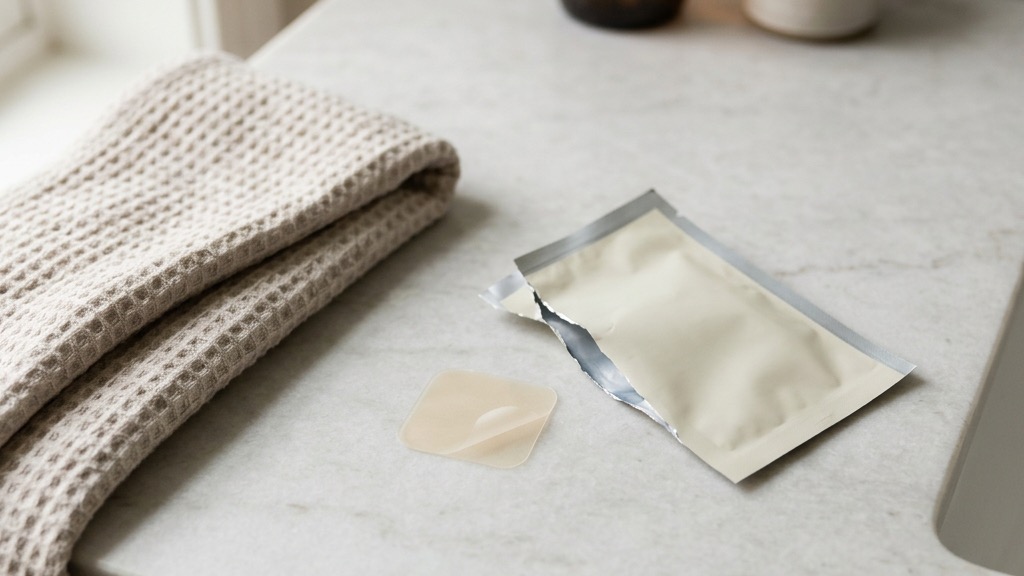
Where to Put HRT Patches (and Why Rotating Matters)
Put an HRT patch on clean, dry, cool skin on your lower abdomen, below the waistline, and use a different spot every time you change it. That is the short version. The longer version, which places to favour, which to avoid, and why rotating actually protects your skin, is worth two minutes, because getting the placement right prevents most patch problems before they start.
One note before the specifics: brands differ, so your patch's own leaflet always wins over any general guide. What follows is the common guidance across reputable sources, useful for understanding the why behind the instructions on your own box.
Where to put it
The target is the lower half of your torso, on skin that is clean, dry, and cool. According to MedlinePlus guidance on the estradiol patch, you apply it to the lower stomach area, below your waistline, and some brands may also be applied to the upper buttocks. Keep it simple:
- Lower abdomen, below the waistline. The standard spot for most patches.
- Upper buttocks, if your specific brand lists it as an option.
- Clean, dry, cool skin, free of lotion, powder, or cream, since anything on the skin stops the patch sticking and can interfere with absorption.
- Press it on properly. MedlinePlus says to press down on the patch with your fingers or palm for 10 seconds, checking there is good contact all the way around the edges.
That ten-second press is the step people rush, and it is the difference between a patch that lasts the full few days and one that curls up by tomorrow.
Where not to put it
Just as important as the right spots are the wrong ones. MedlinePlus is specific about the places to keep a patch away from:
- Your breasts. Never apply a patch here.
- Your waistline. Tight clothing rubs along it and works the patch loose.
- The lower buttocks, where sitting rubs it off.
- Oily, damaged, cut, or irritated skin. Broken or greasy skin will not hold it, and can react.
If you notice your patches keep lifting, look at where you are putting them before you blame the adhesive. A patch under a waistband or on a spot you sit on is fighting friction it was never going to win.
How to apply it cleanly, step by step
The mechanics are quick once you have the spot picked. A clean run looks like this:
- Wash and dry your hands, and check the skin is clean, dry, and cool, with no lotion or powder on it.
- Open the pouch and peel away part of the protective backing, holding the patch by the edge so you do not touch the sticky side.
- Press the exposed adhesive onto your chosen spot, then remove the rest of the backing and smooth the patch flat.
- Press down with your palm for a full 10 seconds, paying attention to the edges so nothing is lifting.
- Wash your hands afterward, and note where this one went so the next change lands somewhere new.
If you are swapping an old patch for a new one, take the used one off first, fold it in half with the sticky sides pressed together before you throw it away, and put the fresh patch somewhere different, not back on the spot the old one just left.
Why rotating actually matters
Rotation is not fussiness, it is skin care. Sticking a new patch on the same square of skin over and over is how irritation creeps in, because that patch of skin never gets a break from the adhesive and the hormone. Mayo Clinic's instructions for the estradiol patch are to apply each new patch to a different area and to wait at least a week before using the same spot again.
So the rule is two-part: a fresh site at every change, and at least seven days before any given spot gets reused. Do that and most people avoid the red, itchy patches of skin that make people want to quit HRT for the wrong reason.
If a site does get red or itchy despite rotating, that is worth mentioning to your clinician or pharmacist rather than pushing through it. Sometimes the fix is the placement, sometimes it is the specific adhesive, and there are usually other options. Skin irritation is a solvable problem, not a reason to walk away from a treatment that is otherwise working for you.
A rotation you will actually remember
Here is the catch. "A different area than last time" only works if you remember last time, and by the time you are peeling off a three-day-old patch, that detail is usually gone. This is a memory problem, so give it a memory system instead of relying on willpower.
The low-tech version is easy enough. Think of your lower belly as four boxes. Top left, top right, bottom left, bottom right. If your brand lets you use the upper buttocks, that is more boxes to work with. The whole trick is going through them in the same order, every single change. You could keep the last spot on a sticky note by the packet. Except the note is never with you at the moment you are actually putting the patch on.
Say you go left of your belly this Monday, then the right side come Thursday. Upper-left and upper-right the following week. By the time you loop back to that first spot, well over a week has gone by. The precise map is not the point. Actually following one is.
This is the exact job Rosel's visual body map that shows your last patch sites is built for: it marks where the recent patches went, so the next site is a glance rather than a guess. And if you also lose track of which day the change is even due, the same log handles keeping your HRT change day on schedule. The app records and reminds. It does not set your dose or replace your clinician's instructions.
If a patch lifts or falls off
Patches come off sometimes. Usually it is heat, or water, or a waistband rubbing at it. Catch an edge lifting early and you can often just press it back down for a few seconds. It grabs again. But a patch that has fully dropped off and won't restick is a different story. Do not improvise, and definitely do not stick a second one on to make up for it. Grab the leaflet from the box first. Still unsure? Ask a pharmacist or your clinician. What you should do really does depend on your particular patch, and on how far through its cycle it was.
If you are not sure a patch is even your best form
All of this assumes a patch is the right delivery for you, and that is worth confirming. Patches suit people who would rather not think about a daily dose, but gels, sprays, and tablets each have their place. If you are still weighing it up, I compared them in a guide to choosing between HRT patches, gel, and tablets, including the one difference that is medical rather than personal preference.
Placement is the boring part that saves you trouble
Get two habits right and patches mostly behave: clean dry skin on the lower abdomen with a firm ten-second press, and a fresh, rotated site every single change. Neither is complicated. Both are easy to forget in a rushed morning, which is the entire point of writing them down somewhere reliable.
If you would rather the rotation and the change-day reminders live in one place, Rosel on the App Store keeps the body map and the schedule together, with your health data staying on your phone or your private iCloud, never sold and never stored on a server. The app keeps the record. Your leaflet and your clinician keep the medical calls.